Furniture China 2026 Review: Furniture Buyer Trends & Sourcing Outlook
Iris · 23 September 2026
The busiest part of a furniture fair does not always happen during the four days of the show.
It often begins afterwards.
Buyers return home with hundreds of photos, catalogues, WhatsApp contacts and quotations. They compare suppliers again. They check websites, discuss products internally, calculate margins and container loading, and decide which conversations are worth continuing.
Nearly two weeks after Furniture China 2026, that process is now well underway.
From the conversations we had in Shanghai, together with the wider signals coming from the Chinese furniture industry and key overseas retail markets, one thing seems increasingly clear:
international buyers are still looking for new products, but they are buying more carefully than before.
The question is no longer simply:
"Is this product attractive and is the FOB price competitive?"
More often, it is becoming:
"Why should I add this product to my range, how much inventory do I need to commit to, how quickly can I test it, and how easy will it be to reorder if it works?"
That change matters.
International buyers are still coming to China — but with clearer objectives
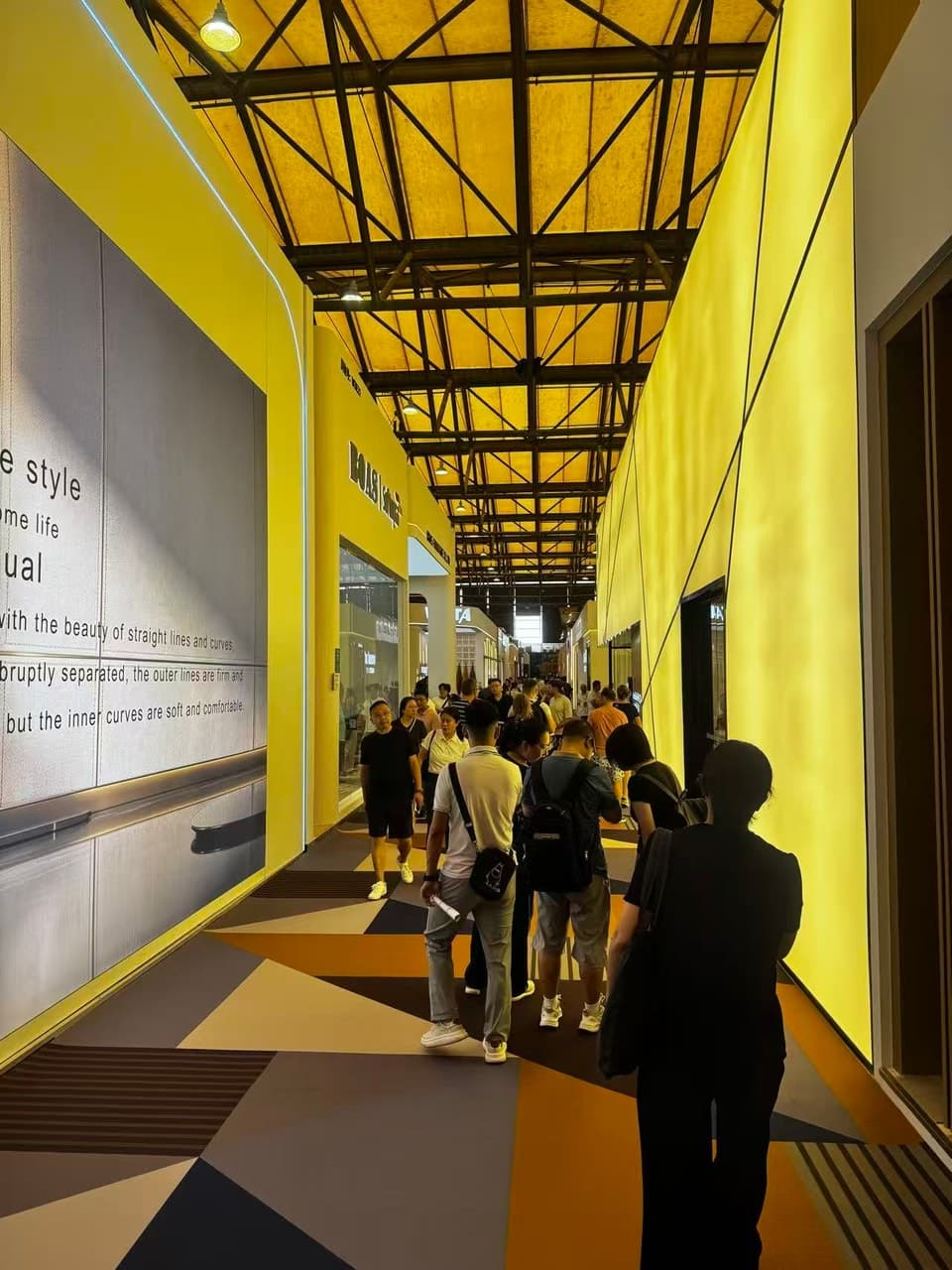
The international presence in Shanghai this September was noticeable.
The wider Shanghai furniture week confirmed that overseas sourcing activity remains strong. CIFF Shanghai reported 93,633 professional visitor entries, including 16,657 overseas visitors — an increase of 40.29% year on year.
Furniture China remains one of the industry's largest sourcing platforms, covering upholstered furniture, bedroom and sleep products, dining, office, outdoor furniture, materials and manufacturing resources. The organiser currently presents the event at a scale of more than 3,200 suppliers and buyers from 174 countries and regions.
The international buyers featured by the organiser repeatedly highlighted product quality, manufacturing capability, new design and the increasing alignment of Chinese suppliers with international market requirements.
But strong attendance should not be confused with easy orders.
The quality of the conversations we experienced in Shanghai suggested that many professional buyers came with clear sourcing objectives. They were not simply looking for another catalogue or another supplier offering hundreds of similar products.
They were looking for a reason to continue the conversation after the fair.
And that reason normally had to be commercial.
The market is improving, but buyers still have good reasons to be cautious
The latest export data helps explain the mood.
Based on a furniture-specific reconstruction of Chinese customs data by Furniture Today China, China's traditional furniture exports reached RMB 373.0 billion in August, up 6.2% year on year. For the first eight months of 2026, exports reached RMB 319.53 billion, an increase of only 0.7%.
That is better than contraction, but it is not a broad-based boom.
End markets remain uneven as well.
In the United States, furniture and home furnishings retail sales finally returned to year-on-year growth in August, rising 1.9%, but year-to-date sales were still approximately 1.6% below 2025 levels.
Europe shows the same mixed picture. Recent market data showed furniture retail activity up approximately 0.9% on a three-month year-on-year basis, while Germany and France remained negative. Poland and the Netherlands, by contrast, continued to perform more positively.
This creates a very particular buying environment:
buyers need new products, but they do not necessarily want more inventory.
That distinction is shaping sourcing decisions.
Function is easier to buy when the commercial case is immediately clear
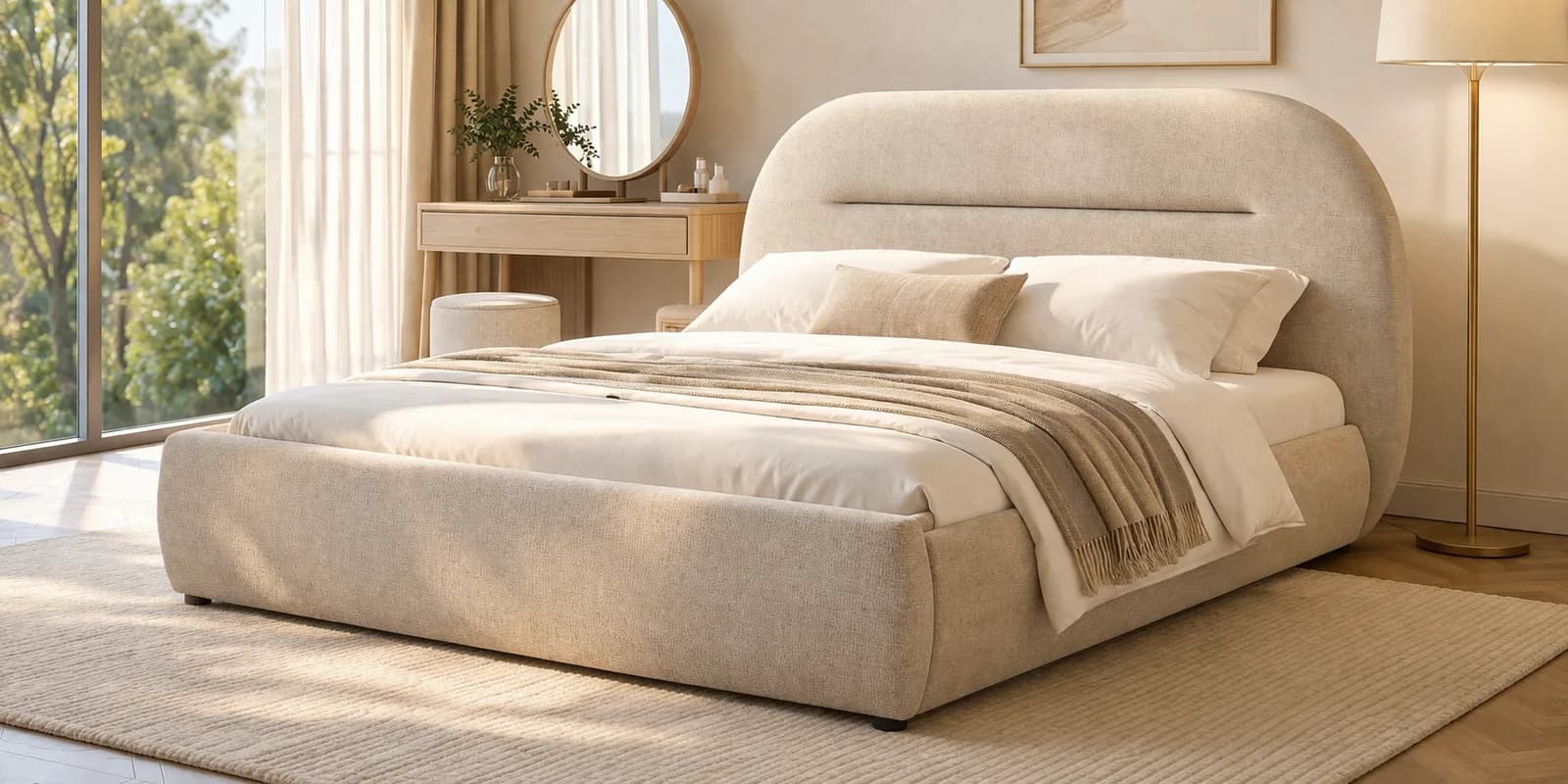
One of the clearest observations from our own conversations after Shanghai has been the continued interest in upholstered beds, particularly gas lift storage beds.
There is a practical reason.
A gas lift storage bed does not require a long explanation.
The buyer can immediately understand the consumer benefit:
bed + storage + upholstered design.
The commercial discussion can therefore move quickly toward price, mattress size, fabric, loading quantity, packaging and retail positioning.
The product has a visible reason to exist.
This does not mean decorative furniture or accent seating has become unimportant. Far from it. But products that depend primarily on styling often require a stronger collection story.
A buyer walking through a large international furniture exhibition may see hundreds of armchairs.
For an individual chair to stand out, "nice design" is rarely enough.
It needs a commercial role.
Is it an entry-price chair?
A natural wood collection?
A hero design?
A small-quantity trial product?
A mixed-container addition?
A coordinated chair for an existing sofa or dining range?
The clearer that role becomes, the easier the buying decision becomes.
Value for money is becoming more sophisticated
One phrase we heard repeatedly around the show was "good value".
But value should not be confused with the lowest FOB price.
For professional furniture buyers, the real cost of a product extends well beyond the quotation.
A cheaper chair that requires a large MOQ, occupies container space inefficiently, creates slow-moving stock and is difficult to reorder can ultimately be more expensive than a slightly higher-priced product with better sell-through and a more flexible buying structure.
The modern furniture buying equation increasingly includes several variables at the same time:
FOB price, retail potential, MOQ, loading efficiency, inventory exposure, product differentiation and repeat-order reliability.
This is particularly important for importers, e-commerce retailers and regional wholesalers that need to keep their assortments fresh without continuously increasing warehouse inventory.
That is why we believe the meaning of "competitive" is changing.
It is moving from:
the lowest unit cost
toward:
the best commercial balance.
Flexibility itself is becoming part of the product
Another development deserves more attention.
CIFF's manufacturing-side commentary this year noted that furniture producers are increasingly dealing with more fragmented orders alongside higher demands for quality, speed, personalisation and cost control.
That description closely matches what many international buyers are asking suppliers to solve.
A retailer may want to test three bed models instead of committing deeply to one.
An importer may want several chair designs and colours rather than one large homogeneous programme.
An e-commerce buyer may want to introduce a new category without immediately carrying several months of stock.
From the factory's point of view, these requirements create complexity.
From the buyer's point of view, they reduce risk.
This is where sourcing structure becomes increasingly important.
The supplier of the future is not only expected to provide a product.
It may also need to help the buyer decide how to test it.
For Casaviva, this is one of the reasons we continue to develop mixed-model and mixed-category buying solutions.
The objective is not simply to put different furniture into one container.
It is to help buyers create a broader assortment while avoiding excessive commitment to any single product.
In other words:
more products to test, without proportionally more inventory risk.
Why armchairs may need a different buying story
Armchairs remain an important category for us, but Shanghai reinforced one lesson: selling an armchair as an isolated SKU is very different from selling an upholstered storage bed.
An upholstered bed can lead with function.
An accent chair often needs to lead with context.
We believe this means future armchair programmes should increasingly be presented as part of a buying concept rather than simply as a page of individual quotations.
A natural rubber wood collection, for example, can connect armchairs, lounge seating, sofas and selected dining pieces through one material and lifestyle direction.
An Easy Trial collection can combine several commercial chairs at different price points within one purchasing plan.
A mixed living collection can give retailers a way to introduce new shapes without committing too heavily to any single design.
The product has not changed.
But the reason to buy it becomes much clearer.
That distinction may become increasingly important as furniture assortments become more competitive.
Different markets will require different selections
Another lesson from the current market is that there is no longer one simple "European market" or one universal export collection.
Chinese furniture exports to Europe have been growing at very different speeds by country. Through the first seven months of 2026, exports to Germany, the Netherlands, France and Poland were all higher year on year, with Poland showing particularly strong growth among the major European destinations. At the same time, emerging destinations such as India and Russia recorded much faster percentage growth from smaller bases.
This reinforces something we increasingly believe at Casaviva:
product selection should start with the market, not with the catalogue.
The right product for a German importer may not be the right one for a Polish retailer.
The right price architecture for a UK e-commerce customer may differ from the requirements of a Middle Eastern distributor.
The same model can also play different commercial roles depending on the customer's sales channel.
As a result, simply sending the same 300 products to every buyer becomes less useful.
A better sourcing conversation starts with three questions:
What market are you selling into?
What price position are you targeting?
What are you trying to achieve with the next order?
Only then does product selection become meaningful.
The real work starts after the exhibition
Trade fairs create introductions.
They do not automatically create orders.
In the weeks after Furniture China, buyers will continue comparing quotations, checking supplier backgrounds, reviewing photographs, evaluating samples and discussing product selections internally.
Some conversations will move quickly.
Others may take several months.
This is normal.
What matters is whether a supplier can remain useful after the exhibition is over.
At Casaviva, our own post-show priorities are therefore quite simple.
We are narrowing the products we believe have the strongest commercial potential instead of continually expanding catalogues.
We are putting more attention on clear product roles — entry price, easy trial, strong loading, trend-led or hero collection.
We are working on making mixed-container buying easier to understand.
And we are continuing to build our Guangzhou Selection Studio as a place where buyers can review a focused product range, compare directions and make faster sourcing decisions.
The goal is not to offer the largest possible catalogue.
It is to make a very large Chinese furniture supply chain easier to navigate.
The next phase of furniture sourcing will be about better decisions, not simply more choice
China will remain one of the world's deepest and most diverse furniture supply bases.
That creates enormous opportunity for international buyers.
It also creates complexity.
Thousands of suppliers, overlapping product ranges, different MOQ requirements, different quality systems and constantly changing designs can make sourcing surprisingly inefficient.
The opportunity for suppliers and sourcing partners is therefore changing.
Being able to manufacture or quote a product is no longer enough.
The stronger question is:
Can you help the buyer make a better buying decision?
For us, that is what "Easy to Buy" is gradually coming to mean.
Less searching.
Less inventory concentration.
Fewer suppliers to coordinate.
More flexible product testing.
And an easier path from the first trial order to repeat business.
Furniture China 2026 may be over, but many of the most important buying decisions from Shanghai are only beginning now.
And in a selective market, the suppliers that remain useful after the exhibition may ultimately matter more than those that simply attracted the biggest crowd during it.